The Atelier Journal
How to Fold a Pocket Square — 12 Folds
A silk pocket square does one thing that almost nothing else in the masculine wardrobe does: it signals taste in a single visible inch of fabric. Done right, it is the most quietly confident move in a man's outfit. Done wrong, it looks like a rented tuxedo from 1998. The difference is the fold.
What follows is the way we fold pocket squares at the atelier, in order of difficulty, from the most universally flattering to the most ambitious. The rule that overrides every one of them: the silk should look like the man is wearing it, not the man wearing the silk. Never perfectly straight, never crammed in, never sitting higher than the jacket lapel buttonhole.
Fold № 01
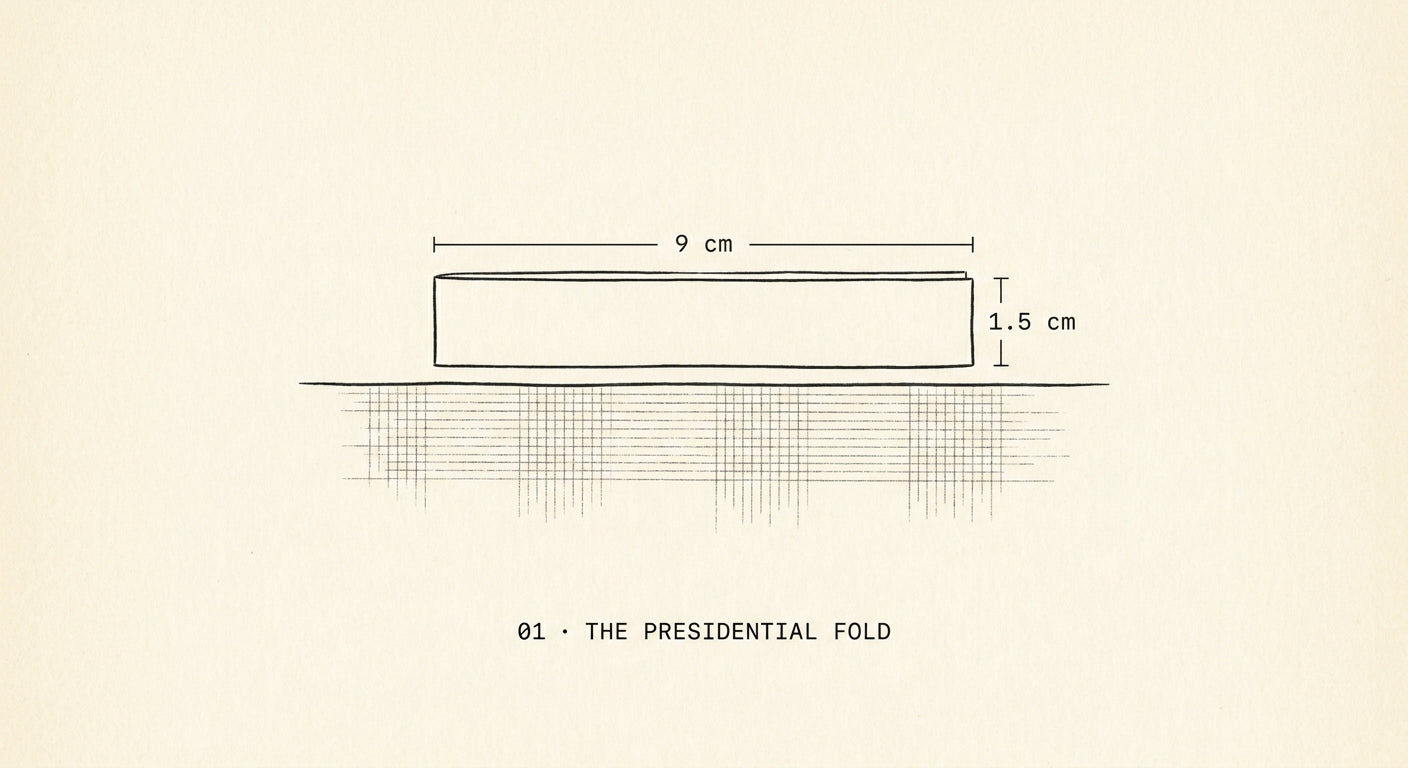
The Presidential Fold
The most quietly elegant option in the masculine wardrobe. Works with every collar style, every suit, every age, every season.
- 1.Lay the square flat on a table.
- 2.Fold left edge to right edge.
- 3.Fold bottom edge to top edge.
- 4.Fold the bottom edge upward to about a third of the height.
- 5.Tuck into the pocket so only a narrow horizontal strip — about a centimetre and a half — shows.
The Presidential is the safest fold and one of the most powerful. The small horizontal reveal lets the print read as a quiet signature rather than a statement.

Fold № 02
The Parisian
Same start as the Presidential, but with a small triangle of silk peeking up at the centre. Slightly more deliberate, slightly more architectural.
- 1.Begin with the Presidential fold up to step 4.
- 2.Before tucking in, fold the front edge into a small upward triangle at the centre.
- 3.Tuck into the pocket; the horizontal strip and the small triangle both show.
Best with a graphic motif or a striking border. The triangle catches the eye.
Fold № 03
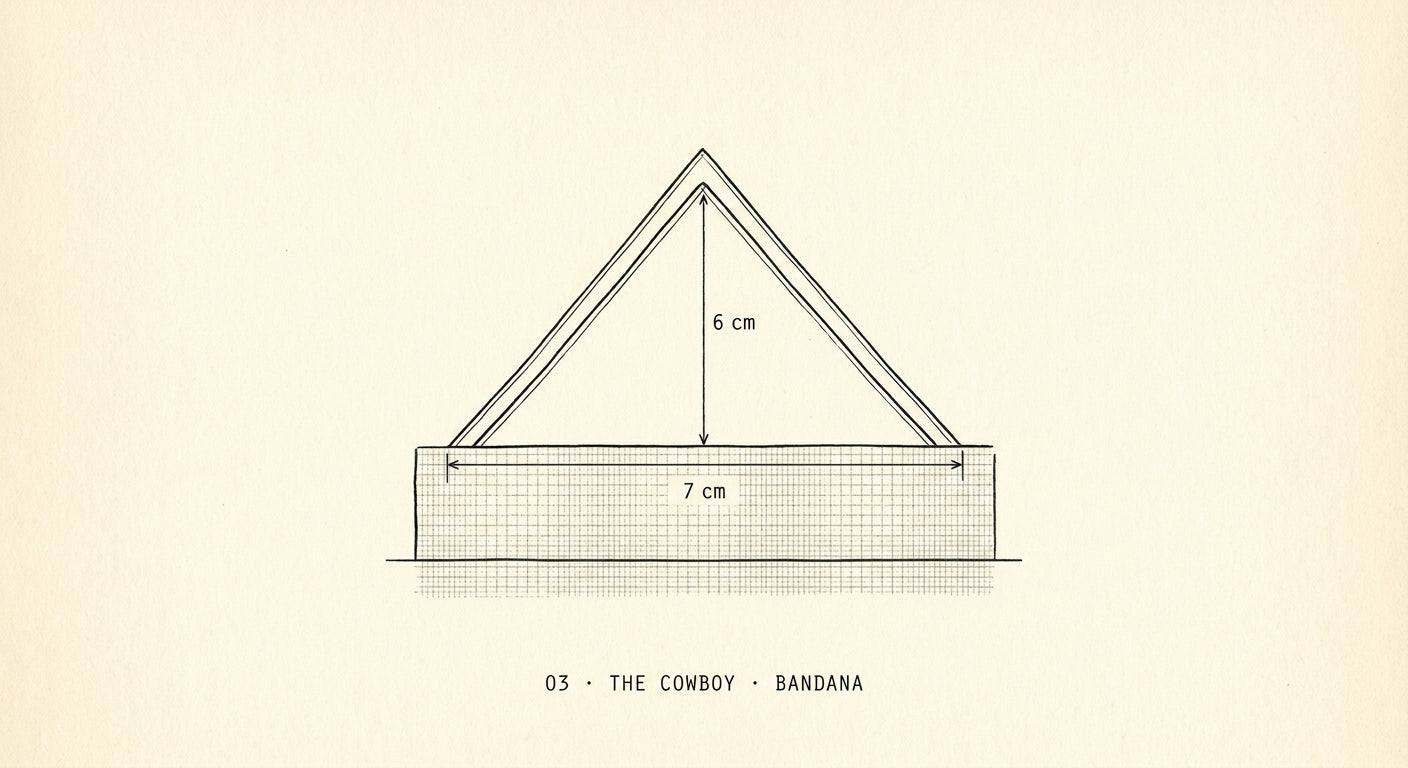
The Cowboy · Bandana
A single triangular point at the centre, knotted at the back. Reads as Sabrina Carpenter at a Texas tour stop.
- 1.Fold the square into a triangle.
- 2.Place the long edge against the throat (or in this case, the pocket edge).
- 3.Let the triangle's point rise above the pocket opening at the centre.
- 4.Adjust so the point sits about 2 cm above the pocket line.
Best with a tight-collared shirt or a plain crewneck. Avoid with a printed shirt.
Fold № 04
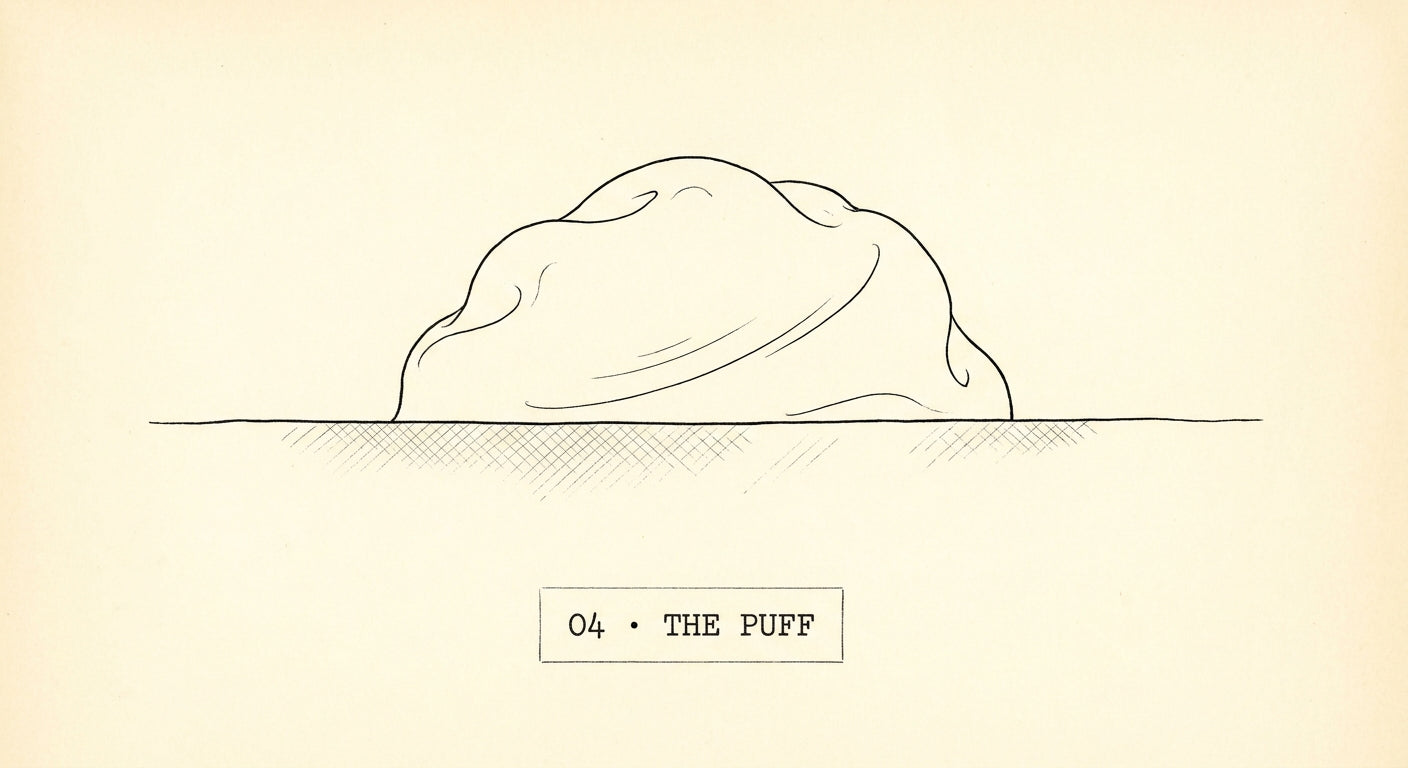
The Puff
Softer, rounder, less formal. Best for evening, cocktail, dinner jackets, anything with wine and good lighting.
- 1.Pinch the centre of the square between your thumb and forefinger.
- 2.Lift, letting the four corners hang down.
- 3.Gather the hanging silk loosely with your other hand.
- 4.Place into the pocket, pinched side up, with the soft loose fabric showing.
The puff is meant to look slightly imperfect. Symmetry is the death of charm here.
Fold № 05
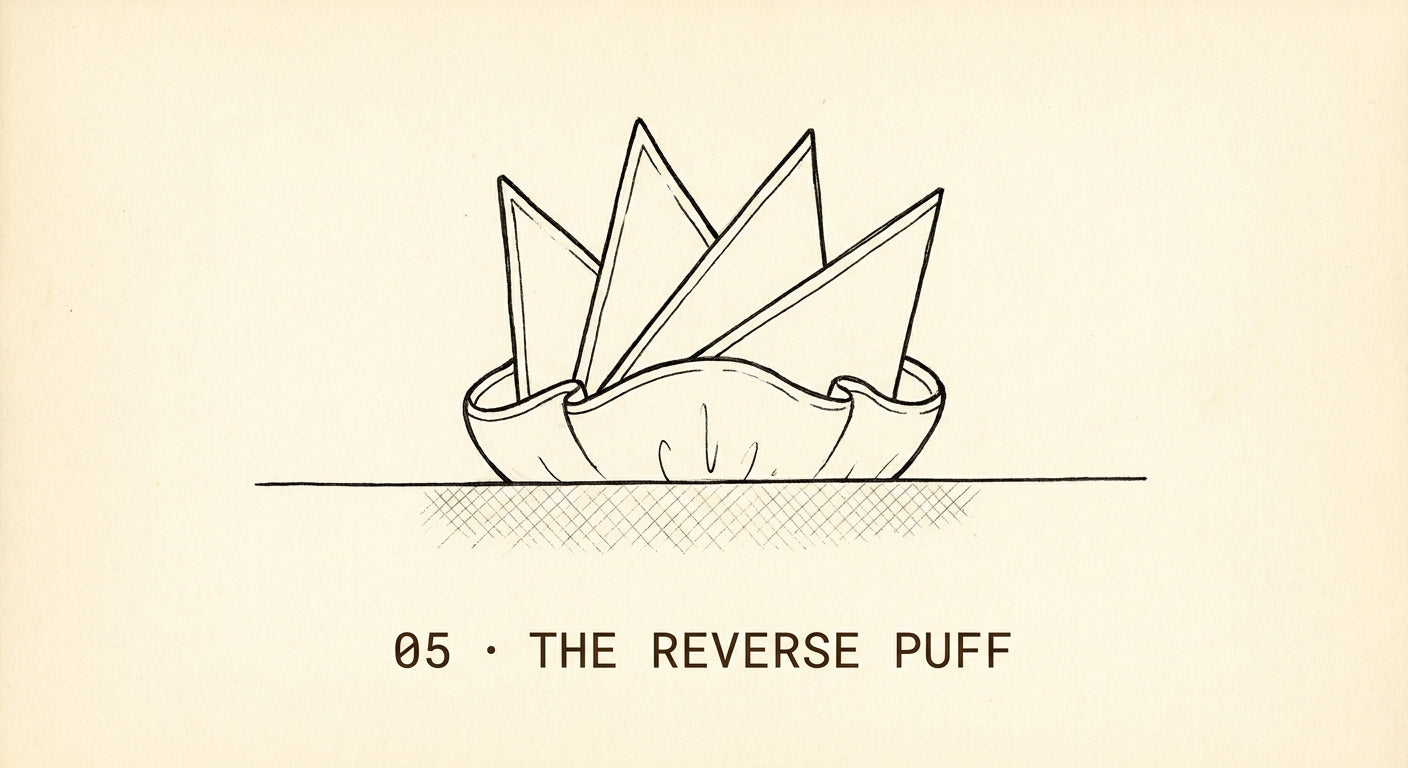
The Reverse Puff
Same as the puff, but placed pinched-side down with the four points showing upward. Reads more architectural, less playful.
- 1.Pinch the centre of the square.
- 2.Lift; let the corners hang.
- 3.Gather the centre with the other hand.
- 4.Place into the pocket pinched side DOWN; the four corners now point up.
Works beautifully with a print where the corners are the most graphic element — toile borders, equestrian crests.
Fold № 06
The Three-Point Fold
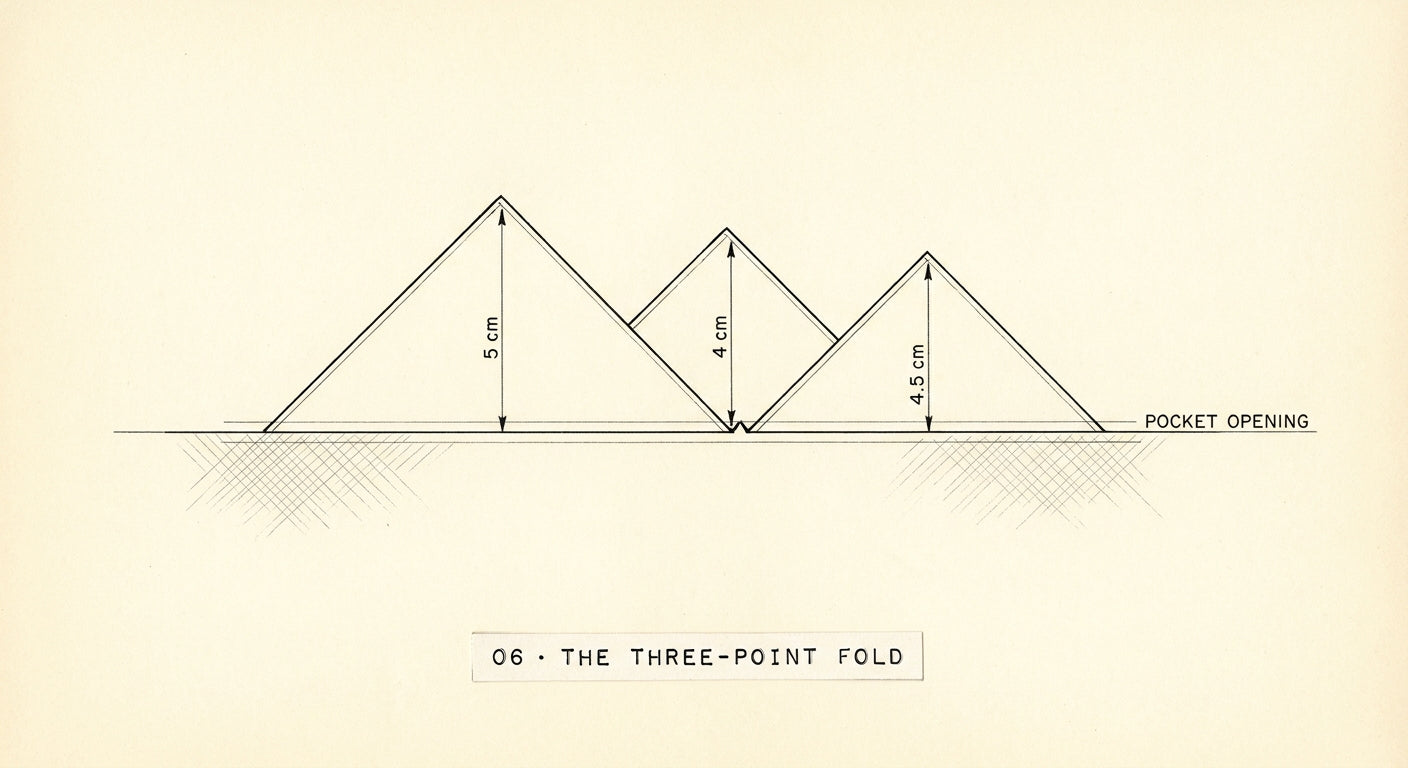
Three triangular points above the pocket. Architectural, sharp, occasion-appropriate. The fold for weddings and formal events.
- 1.Lay the square with one corner pointing toward you (rotated 45°).
- 2.Fold the bottom corner up to the top, creating a triangle pointing up.
- 3.Fold the right corner inward and upward at an angle; a second point emerges to the right of and slightly higher than the centre.
- 4.Fold the left corner inward and upward similarly; a third point emerges on the left.
- 5.Fold the base of the triangle up to fit the pocket. Tuck in. Three points show, deliberately uneven.
The classic wedding-day fold. Pair with a navy or charcoal suit and a discreet boutonnière.
Fold № 07
The Two-Point
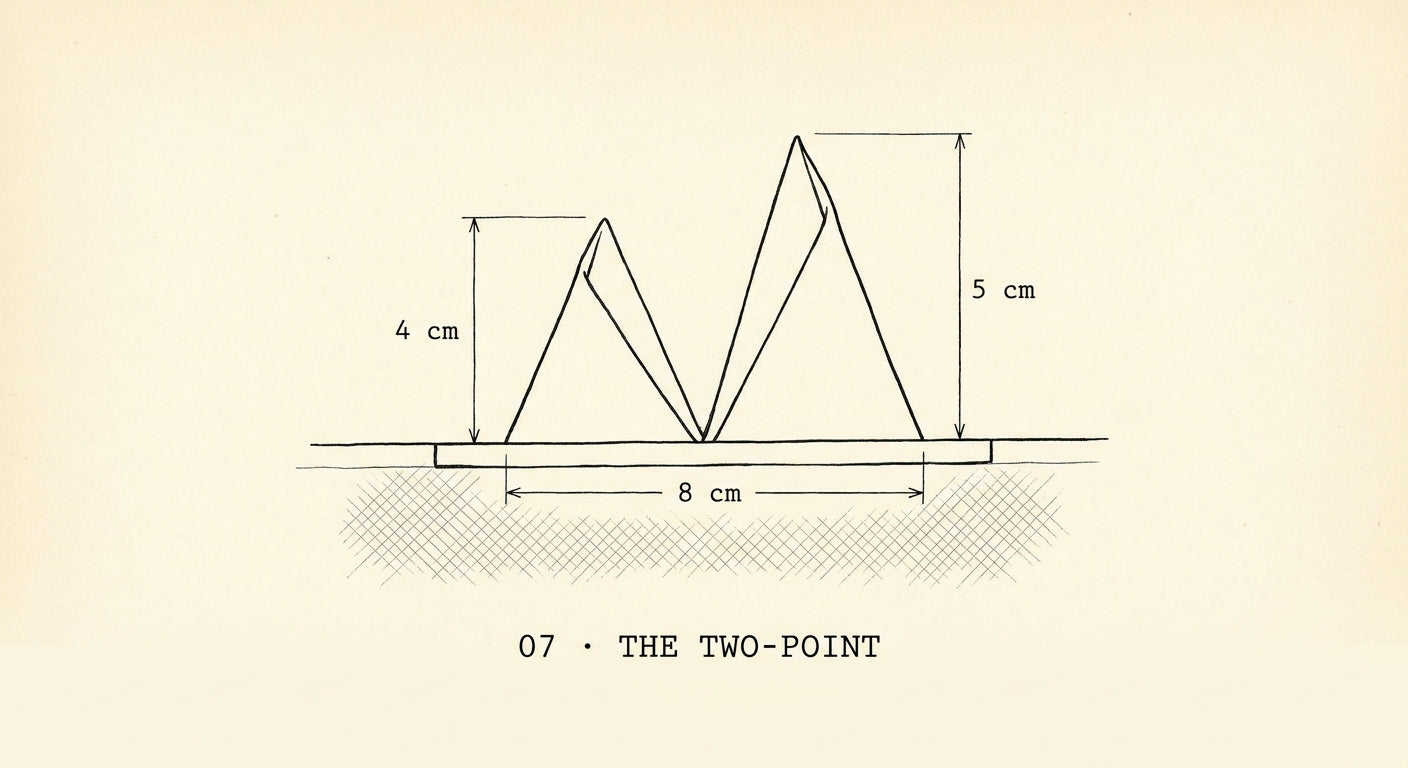
Same wedding-appropriate register as the three-point, slightly less formal. Two points instead of three.
- 1.Begin as a three-point fold.
- 2.Omit the third inward fold.
- 3.Adjust so the two points sit slightly off-centre, not symmetrical.
For the man who finds the three-point too aggressive but wants more architecture than the Presidential.
Fold № 08
The Crown
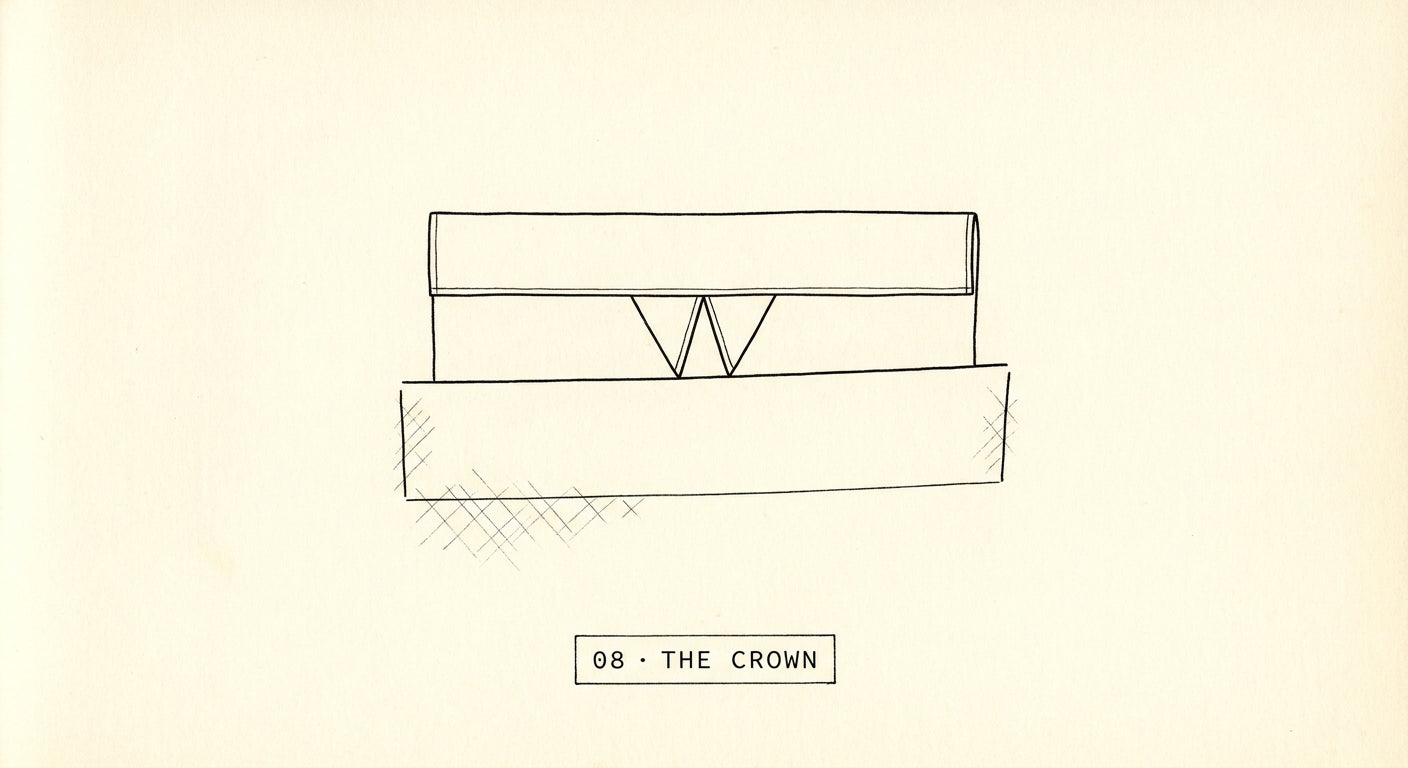
The Presidential's more interesting older brother. A small inverted triangle peeks out below the main horizontal strip.
- 1.Complete a Presidential fold to step 4.
- 2.Before final tuck, fold the lower section back on itself in a small inverted V.
- 3.Tuck. The horizontal strip shows on top; a small triangle of silk hangs below it.
Reads like a small crown above the pocket edge. A favourite of mid-century English tailoring.
Fold № 09
The Cooper
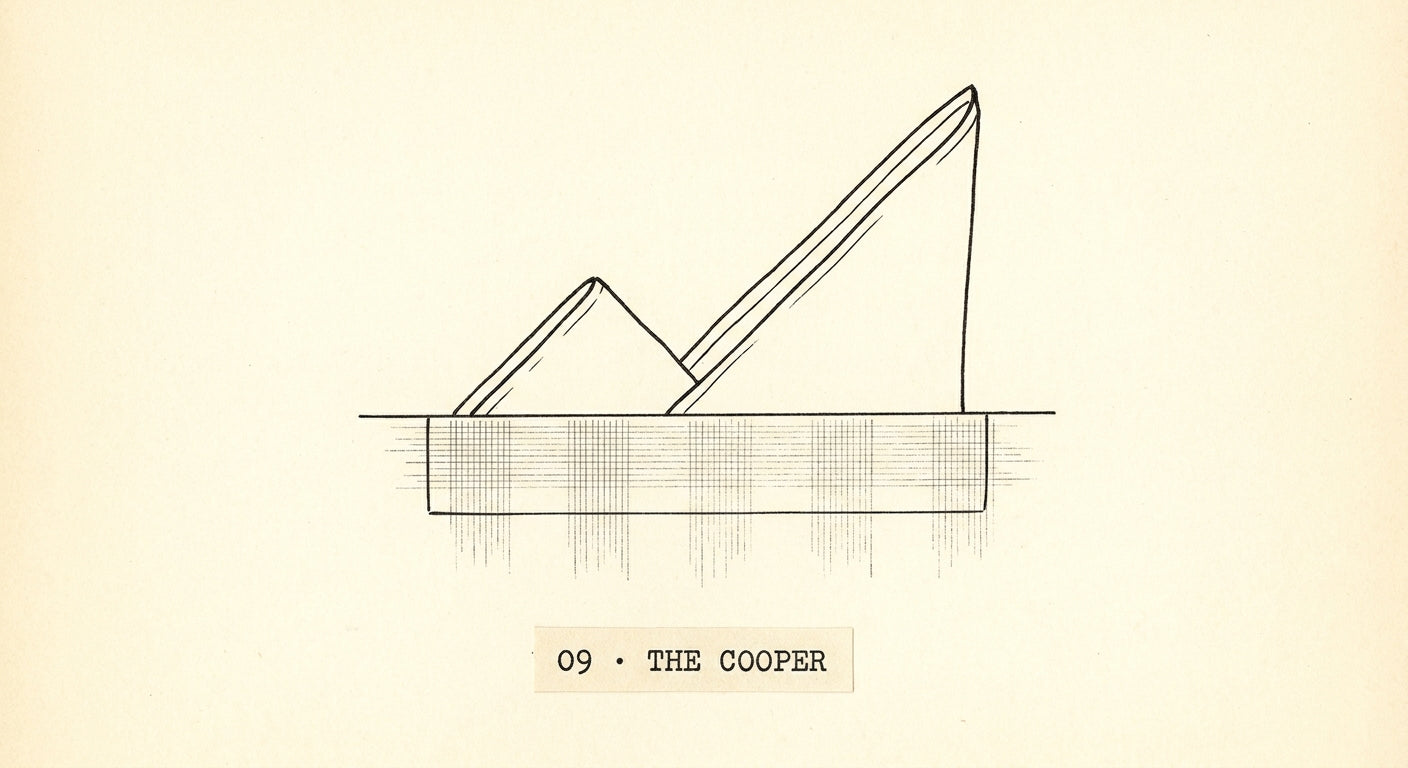
Two points, asymmetric, taller on one side. Gary Cooper's signature. Old-Hollywood masculine.
- 1.Begin with the square laid as a diamond.
- 2.Fold up so two corners meet at a point near the top, offset asymmetrically.
- 3.Fold the base upward to fit the pocket.
- 4.The taller point should sit roughly 4 cm above the pocket; the shorter point about 2 cm.
Works only with a square that has a strong border print or a graphic motif.
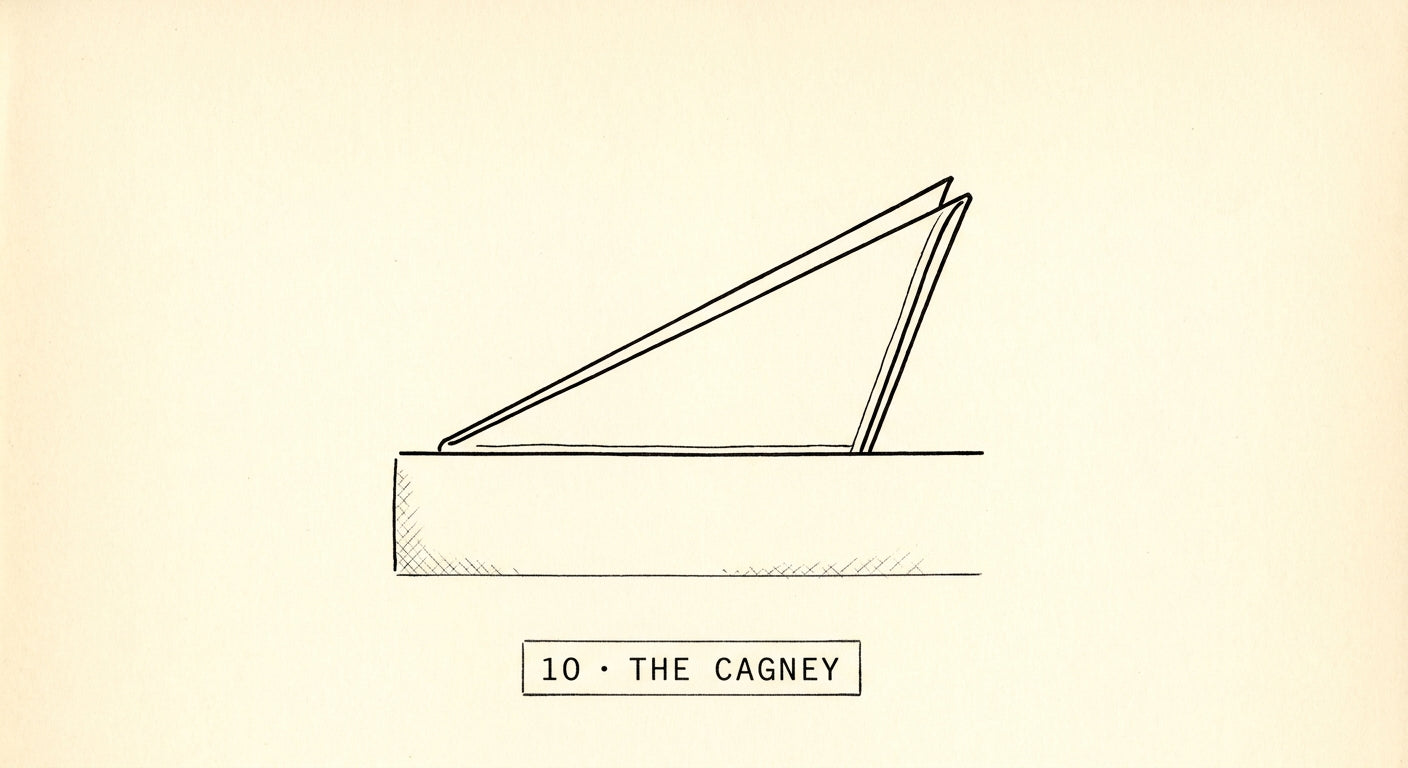
Fold № 10
The Cagney
One sharp point, tilted at a deliberate angle in the pocket. James Cagney popularised this in the late 1930s.
- 1.Fold the square into a triangle.
- 2.Roll the triangle from the long edge into a loose tube.
- 3.Insert into the pocket so a single point emerges at a deliberate angle.
- 4.Adjust the angle until it reads as rakish, not careless.
Best for solid coloured squares or thin geometric borders. Busy florals look messy at this angle.
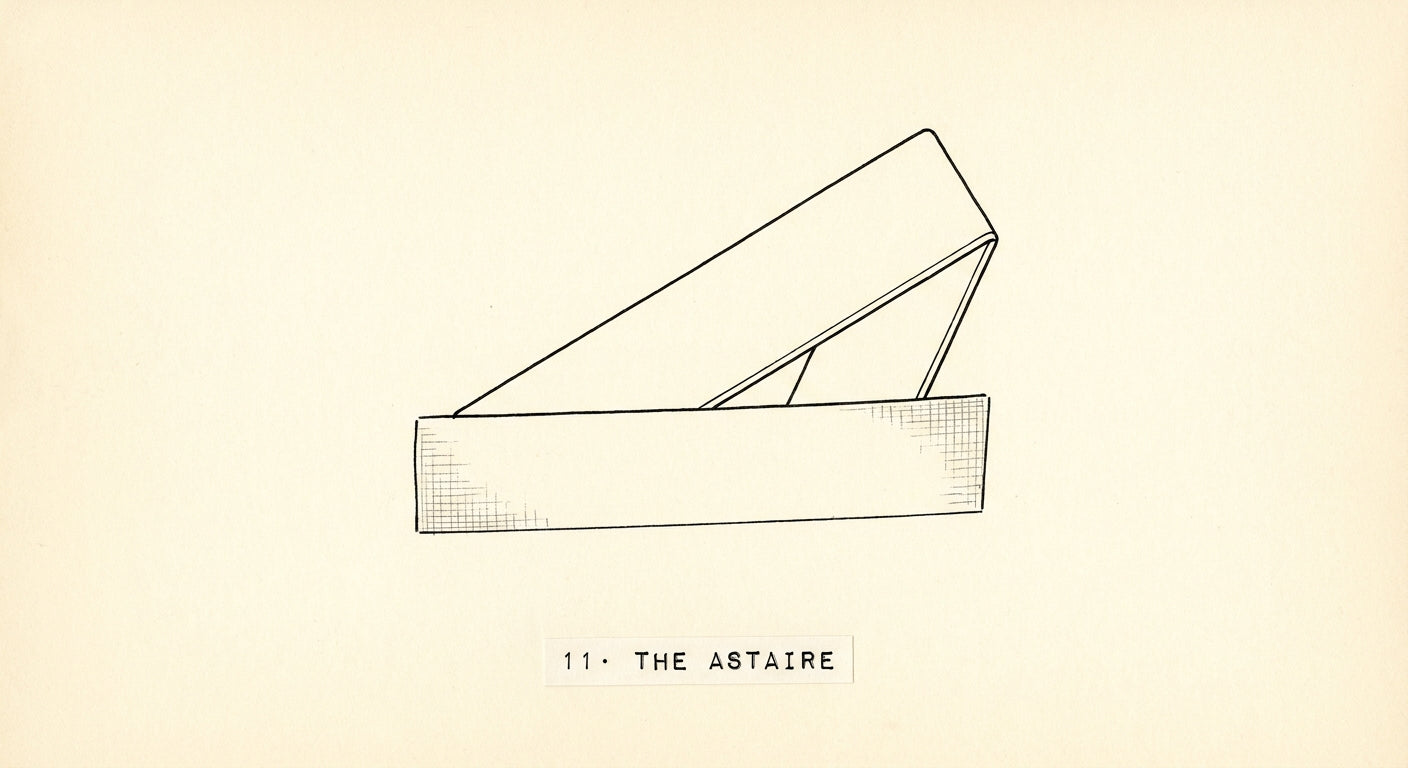
Fold № 11
The Astaire
Folded to show a clean diagonal line of silk across the pocket opening. Confident, dance-floor-ready, slightly mid-century.
- 1.Fold the square into a long thin band.
- 2.Insert into the pocket so the band runs diagonally across the opening.
- 3.Adjust so the diagonal is clean — about 20° off horizontal.
Pair with a striped or geometric square. The diagonal accentuates the linear motif.
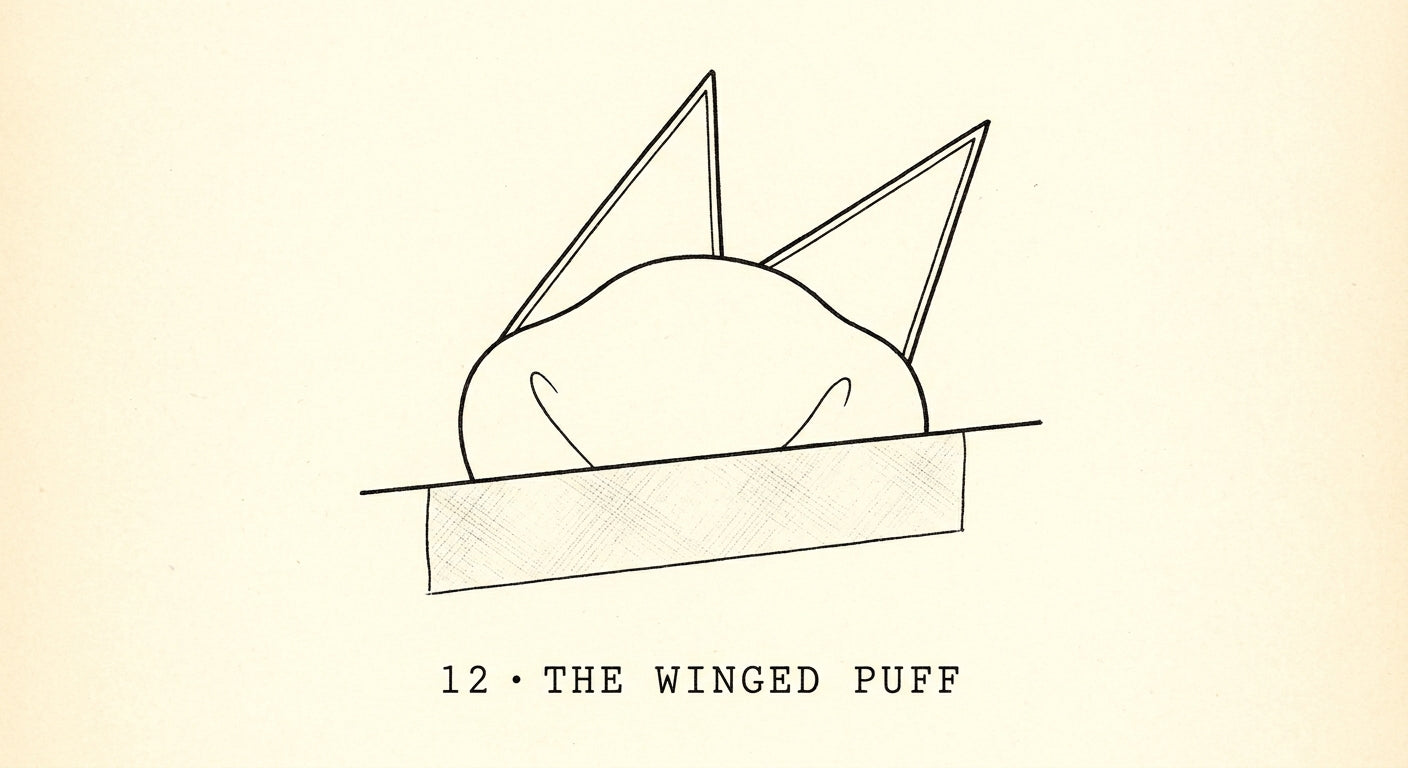
Fold № 12
The Winged Puff
Puff with two raised corner-wings. Careless-but-considered. The hardest of the soft folds to do well.
- 1.Begin as a Puff (pinch the centre, lift, gather).
- 2.As you place into the pocket, deliberately let two opposite corners rise above the soft fold.
- 3.Adjust until the wings sit slightly asymmetrically — never symmetrical.
If both wings sit at exactly the same height, it reads as a mistake. The asymmetry is the point.
A note on size
A pocket square should be 40 to 45 cm square for the standard suit pocket. Larger squares (50 cm and above) can be used but require more skilled folding — they have a tendency to look bulky. Smaller squares (under 35 cm) disappear into the pocket and read as a thin strip rather than a square.
A note on silk weight
Twill (the atelier's standard for our 45 cm pocket squares) has body. It holds knots cleanly. Best for the Presidential, Parisian, Three-Point, Crown, Cooper, and Cagney.
Charmeuse drapes and softens. Best for the soft folds (Puff, Winged Puff, Astaire) where the silk wants to fall rather than hold structure.
A note on print
Match the energy of your suit, not its colour. A grey flannel suit pairs with a printed square that has texture and quiet humour. A navy suit pairs with anything. A black-tie tuxedo pairs only with white twill, ironed sharp, folded Presidential — no exceptions.
All twelve folds work with the atelier's pocket-square archive. Pieces are made-to-order on 100% silk twill — soft enough for puff folds, structured enough for the three-point.